
Introduction
As 2025 comes to an end, it is essential to review your Microsoft Defender environment to ensure that new features are properly configured. Microsoft has introduced many security solutions to counter increasingly sophisticated cyberattacks. Yet we often find that environments are not updated with the latest features, which reduces protection and visibility.
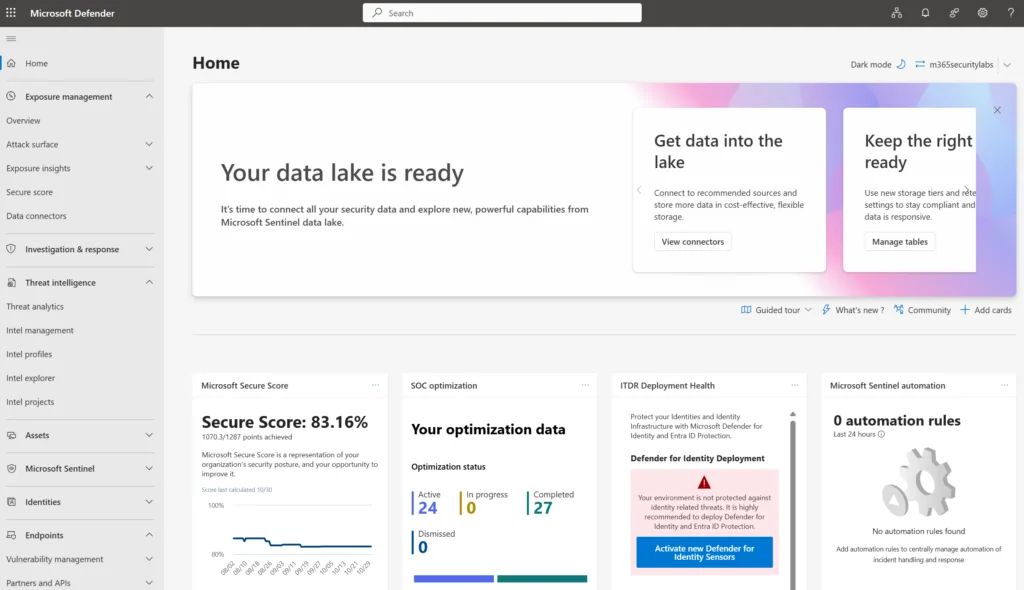
Why avoid a "set-and-forget" approach?
Microsoft has significantly improved Defender's capabilities. A "deploy and forget" strategy is no longer viable. Features and protections evolve rapidly, requiring constant reassessment to benefit from the latest security innovations. Furthermore, many features require manual configuration, which reinforces the need for proactive management.
Defender Configuration Elements
Here are some critical configurations to consider:
- Enable unified M365 audit logging with retention of more than 12 months for all event types.
- Fully configure attack disruption and test with simulated attacks.
- Define and tag critical assets in exposure management.
- Explore attack paths and blocking points in exposure management.
- Integrate exposure management into the IT/Security organization.
- Migrate to unified RBAC and document RBAC configurations.
Enable Unified M365 Audit Logging
It is crucial that unified M365 audit logging be enabled for all event types with at least 12 months of retention. This allows you to track administrative activities and maintain complete logging.
Attack Disruption
This is a key point for preventing and limiting attacks. Unfortunately, configuration errors persist, compromising effectiveness. Here are some common errors to avoid:
- Forgetting certain products during deployment (MDI often omitted).
- Not properly configuring device protection.
Tip
For optimal protection, ensure that all relevant products are deployed, including Defender for Identity and Defender for Cloud Apps.
Exposure Management
Identifying critical assets is essential for prioritizing security efforts. They play a crucial role in calculating attack paths. In the future, Microsoft will place even greater emphasis on asset criticality, making strategic classification indispensable.
Unified RBAC
Unifying RBAC models helps avoid gaps in access management and improves visibility and accountability. Carefully document all role assignments and permissions to strengthen resilience in case of incident.
Conclusion
In 2025, it is imperative to optimize Microsoft Defender with configurations aligned with the latest security practices to ensure robust cybersecurity. Don't wait until 2026 to adjust your strategy!
Useful Links
Glossary
- RBAC: Role-based access management model
- M365: Microsoft 365, a suite of cloud services
- MDI: Microsoft Defender for Identity, identity protection solution