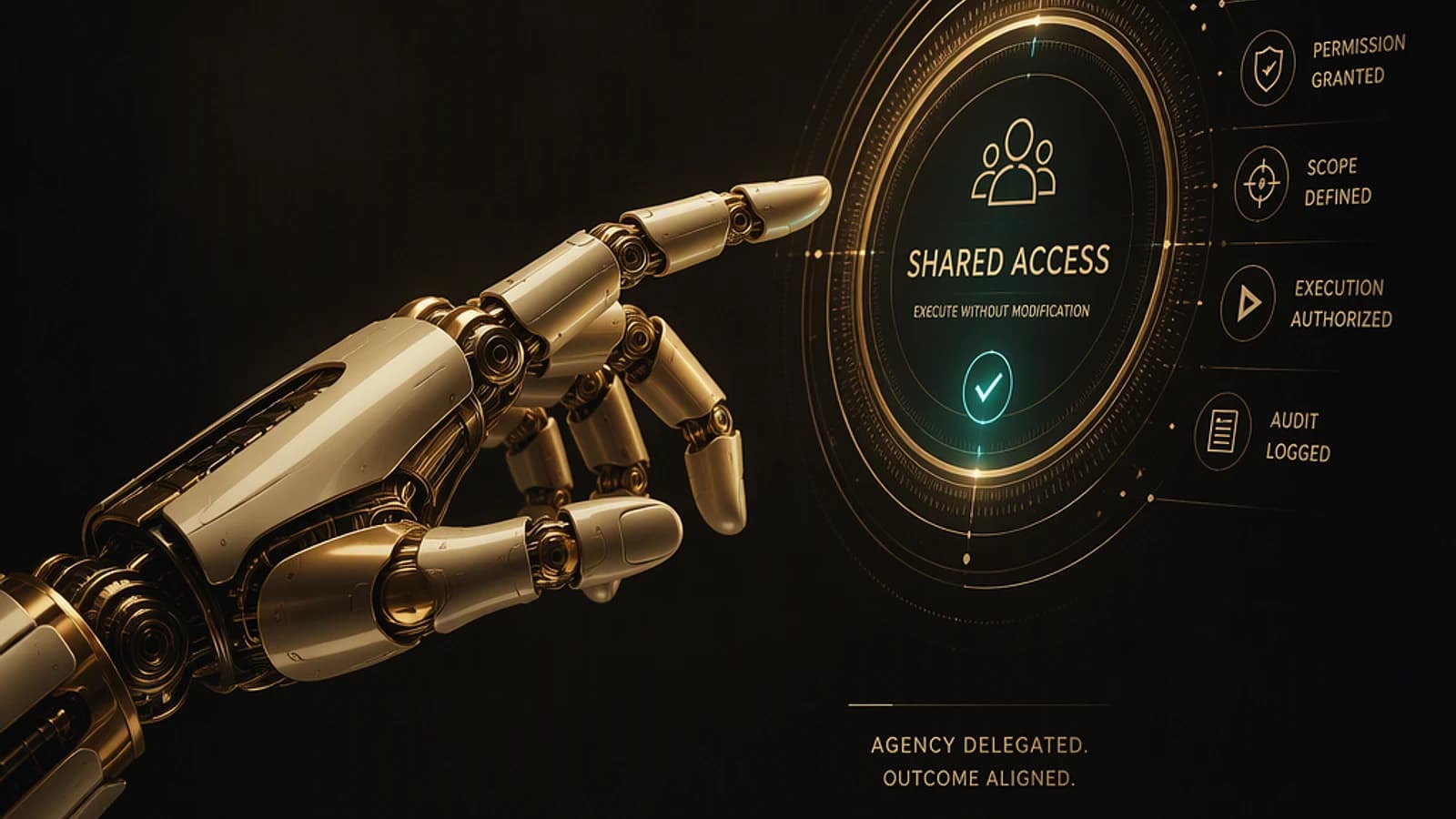
Microsoft is preparing a significant evolution for Copilot Studio: a "Run-Only" (execution only) sharing mode for autonomous agents. This feature, still in development, aims to remove a well-identified barrier to adoption of agentic AI in the enterprise: permanent dependency on makers to access an agent. Here's what this concretely changes for IT teams and agent creators.
The current lock: agents reserved for makers
In the current model of Copilot Studio, a platform for creating, extending, and orchestrating agents (the three pillars Build, Extend, Orchestrate), an end user cannot simply "use" an autonomous agent. To access it, they need editing or ownership rights on the agent — permissions largely disproportionate to their actual need, which most often is limited to triggering the automation.
This constraint has several direct consequences:
- every access or modification must necessarily go through the maker who built the agent;
- adoption remains confined to a restricted circle of technical creators;
- the business value generated by the agent does not spread across the organization, even when the use case would justify it.
This pattern echoes a limitation already known to Power Platform administrators on canvas apps and classic Power Automate flows, where opening a share historically implied granting unnecessary editing rights.
Run-Only mode: execute without ability to modify
Sharing in Run-Only mode introduces a clear separation between two populations: makers, who retain control over the design, logic, and configuration of the agent, and end users, who can launch and use the agent without ever accessing its settings.
Concretely, a Run-Only user can:
- trigger execution of the autonomous agent;
- view the results produced by the automation;
- benefit from the use case without needing to understand the underlying architecture.
They cannot, however, modify the agent's instructions, change its connectors, or claim ownership of it. The maker remains the sole decision-maker on evolutions, security, and governance of the agent they created.
A principle already known in Power Platform
Execution-only sharing is not an absolute novelty in the Microsoft ecosystem: Power Apps and Power Automate have long offered comparable mechanisms, where the end user is granted usage access without modification rights. Copilot Studio now applies this same logic to autonomous agents.
What changes for governance, what remains the same
This evolution does not alter the fundamentals of agent governance in Copilot Studio: the maker remains responsible for security, connectors used, and compliance policies applied to the agent. What changes is the scope of people who can benefit from it daily.
This model concretely applies the principle of least privilege: a business user only needs to execute the agent, not maintain it. By limiting their rights to execution, the organization reduces the attack surface while expanding the actual use of automation.
| Capability | Owner / Editor Access (current) | Run-Only Access (coming) |
|---|---|---|
| Execute the agent | Yes | Yes |
| View results | Yes | Yes |
| Modify agent instructions | Yes | No |
| Change connectors or triggers | Yes | No |
| Claim ownership of the agent | Yes | No |
| Governance responsibility | Maker | Maker (unchanged) |
Expected benefits for organizations
Microsoft positions this feature around three axes: broader adoption of autonomous agents across the organization, secure sharing that grants no editing or ownership rights, and increased business impact through wider distribution of automations across teams and functions.
This promise is summarized by the formula used to present the feature: "More People, More Impact" — more people able to use an agent, for greater business impact generated. It aligns with the broader trajectory displayed by Microsoft for Copilot Studio, described as moving "From Ideas to Impact".
Timeline and availability
This Run-Only sharing capability for autonomous agents is currently marked "Coming Soon" by Microsoft, with deployment beginning announced for January 2027. As with any feature before general availability, this timeline remains indicative and should be monitored via official Microsoft communication channels before any operational planning.
Feature not yet available
No configuration is currently possible in Copilot Studio to enable this sharing mode. IT teams can, however, start mapping existing autonomous agents and identifying those that would benefit from wider distribution in execution-only mode.
What IT teams should prepare now
While waiting for this feature to become available, several preparatory actions make sense:
- Inventory autonomous agents currently limited to their makers, identifying those whose usage could safely be expanded to business users.
- Clarify Power Platform security roles associated with these agents, to anticipate assignment of future Run-Only access without reproducing current rights excesses.
- Document maker responsibilities regarding maintenance and governance, since broader sharing transfers none of these responsibilities to end users.
- Check impact on Copilot Studio consumption and licensing once official documentation is published, as a more widely shared agent will naturally be used more.
Organizations already running multiple autonomous agents in Copilot Studio have every reason not to wait for general availability to start this mapping work: this preparatory work, more than the feature itself, will determine how quickly adoption happens once Run-Only sharing is deployed.