Introduction to OpenAI Agentic Architecture
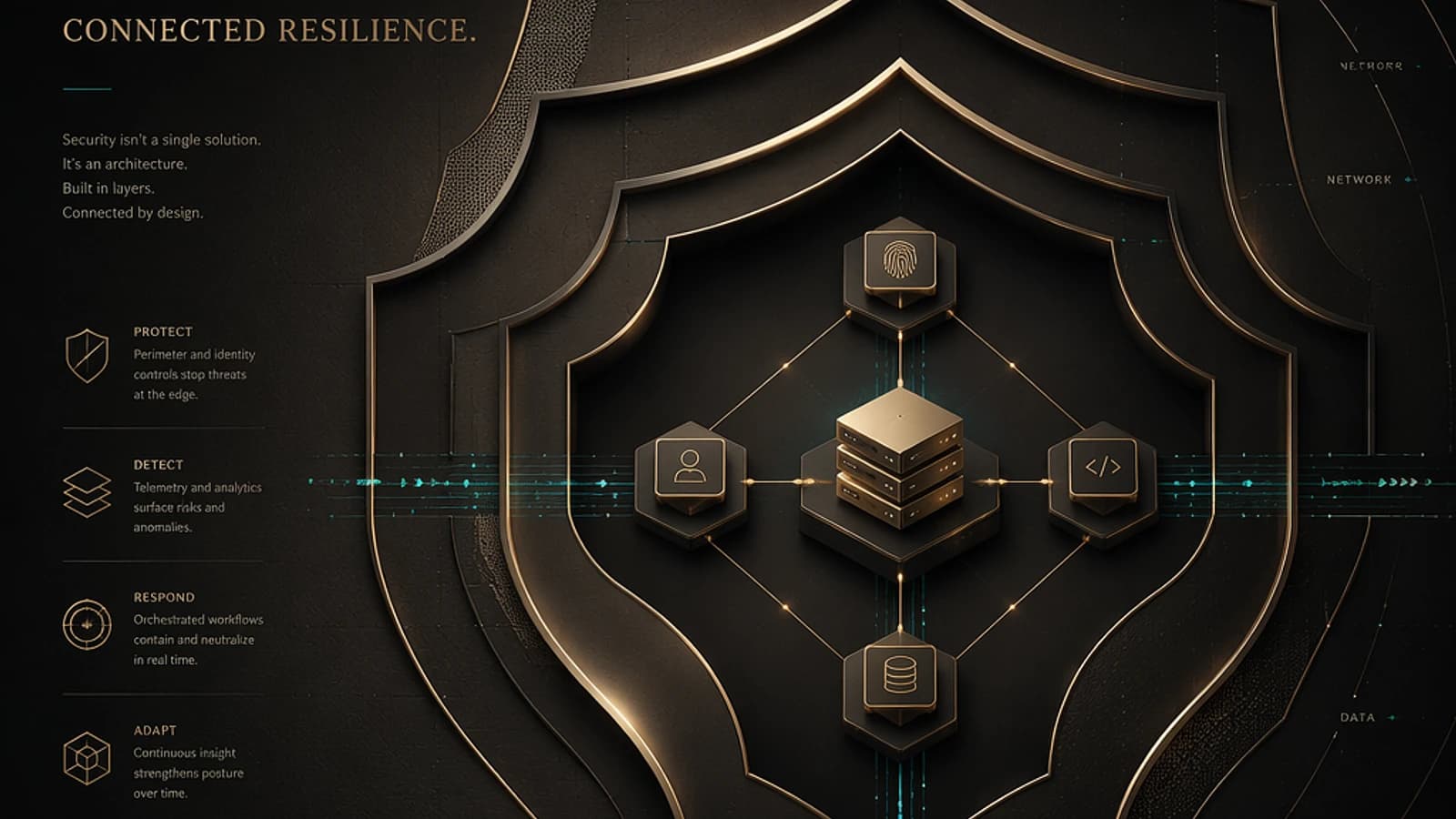
Organizations considering the integration of autonomous AI agents must understand that their adoption does not rest solely on the quality of a model. A true enterprise agentic AI strategy requires a holistic platform combining development frameworks, specialized models, robust deployment infrastructure, memory management and security governance.
This article examines the six-layer structure of a modern agentic platform and explains how each level contributes to a mature and secure enterprise AI implementation.
Good to Know
The models and versions mentioned (Sol, Terra, Luna, Thinking, Codex, GPT 5.5, GPT 5.6) constitute an illustrative representation of the logical architecture. Always consult OpenAI's official announcements to confirm available product offerings and versions.
Unified Vision: Six Layers for the Complete Lifecycle
A well-designed enterprise agentic platform is organized around a layered architecture that covers the entire lifecycle, from design to governance.
Principles of a Layered Architecture
- Layer 1: Frameworks & Tools — Technical foundations and SDKs
- Layer 2: Specialized Models — Differentiated range according to use cases
- Layer 3: Products & Workspace — Business interfaces and concrete use cases
- Layer 4: Deployment & Infrastructure — Production execution and cloud availability
- Layer 5: Memory & Storage — Context and compliance management
- Layer 6: Security & Governance — Safety assessments and safeguards
This holistic architecture recognizes that model performance alone is insufficient: secure integration, operational scalability and regulatory compliance are critical requirements.
Layer 1: Frameworks and Agentic Development Tools
Technical Foundations for Creating Autonomous Agents
The development layer brings together essential elements for building and integrating autonomous AI agents into your infrastructures.
Agents SDK enables developers to build sophisticated agents in Python and TypeScript. This SDK encapsulates the capabilities required to orchestrate agentic logic, manage model calls and coordinate multiple complex tasks.
Responses API unifies three fundamental elements in a single endpoint:
- Integration of external tools and business resources
- Advanced reasoning engines for logical deduction
- Orchestration of multi-step agentic workflows
Model Context Protocol (MCP) and Secure MCP Tunnel establish secure connections between your agents and private enterprise data. MCP is progressively establishing itself as an open standard for connecting language models to external context sources securely, thereby reducing data leak risks.
Emerging Standards for Secure Integration
The adoption of Model Context Protocol reflects a desire to standardize agent-data integrations. Rather than developing proprietary connectors for each source, an approach based on a shared protocol simplifies architecture and increases security.
Layer 2: Range of Specialized Models
Model Segmentation According to Business Needs
Rather than offering a single model, a modern agentic platform strategy relies on intelligent segmentation: each model is calibrated for a specific usage profile, balancing intelligence, latency and cost.
| Model Profile | Primary Use Case | Characteristics |
|---|---|---|
| Sol | Advanced reasoning and complex workflows | Maximum performance, ideal for multi-step problems |
| Terra | Balanced general-purpose intelligence | Reduced cost, good performance-economy tradeoff |
| Luna | Daily tasks and real-time operations | Very fast and economical, high volume |
| Thinking | Deep extended reasoning | Solving difficult problems, higher latency tolerated |
| Codex | Code generation and modification | Dedicated autonomous agent for repositories, pull requests, long tasks |
This approach enables organizations to optimize their operational costs while maintaining result quality for each task type.
Sizing Tip
Evaluate your workflows in homogeneous groups (complex analyses vs. repetitive tasks) and assign the appropriate model. This granularity reduces execution costs without compromising quality.
Layer 3: Products and Business Environments
Interfaces and Concrete Use Cases
This layer translates technical capabilities into user-oriented business solutions.
Codex as an autonomous software engineer automates development tasks: code generation, refactoring, testing, and continuous integration.
ChatGPT Agent enriches the conversational experience with multiple integrated capabilities:
- Deep Research to synthesize and analyze information in real-time
- Web browser to access external data
- System terminal to execute commands
- Connectors to standard business tools
Deep Research constitutes a distinct function dedicated to autonomous research and multimodal synthesis without intermediate human intervention.
Sora 2 provides video content generation up to 60 seconds, expanding use cases beyond text and images.
GPT-Image-1 automates computer vision tasks:
- Image generation from descriptions
- Editing and transformation of existing images
- Inpainting and intelligent filling
- API access for direct integration
Layer 4: Deployment and Production Infrastructure
Execution and Availability in Enterprise Environment
Reliable production execution imposes specific infrastructure and performance requirements.
OpenAI on AWS enables deployment of the most advanced models and Codex directly in your Amazon Web Services environments. This approach addresses data localization requirements, guaranteed latency and regulatory compliance.
Realtime API provides:
- Ultra-low latency for audio interactions
- Live voice agents
- Bidirectional streaming for natural conversational experience
Fine-Tuning Pipeline adapts models to your proprietary data via preference optimization, enabling personalization without full retraining.
Caution
Production deployment requires rigorous validation of latency, availability and cost. Test configurations before large-scale production launch.
Layer 5: Memory and Storage for Context Persistence
Controlled Management of Agentic Memory
The ability of agents to memorize and recall information constitutes a critical, but often overlooked, element of compliance and governance.
Dreaming V3 brings a capacity for factual recall maintained over time, with a reported accuracy rate of 82.8%. This function stabilizes response consistency over long conversations and repeated interactions.
Memory Summary Page offers administrators and end users:
- Consultation: view elements memorized by the agent
- Editing: correct or update stored information
- Deletion: purge data that has become obsolete or sensitive
This audit and control capability is a mandatory compliance prerequisite essential for complying with regulations such as GDPR (right to be forgotten) or enterprise security standards.
Enterprise Connectors integrate common business data sources:
- Google Drive
- Slack
- SharePoint (for Microsoft 365 environments)
- Salesforce
- SQL databases
These integrations enable agents to access relevant business context without exposing sensitive data beyond authorized perimeters.
Important
Agentic memory management is not optional. Establish clear policies for retention, deletion and audit to ensure regulatory compliance and user trust.
Layer 6: Security and Model Governance
Foundations of Trust and Safety
The final layer institutionalizes the safeguards and controls necessary for responsible AI adoption in the enterprise.
Preparedness Framework establishes a systematic process:
- Safety assessments prior to each major model release
- Adversarial testing to identify failure cases
- Performance audits on sensitive populations
- Documentation of known limitations
Layered Safeguard Stack combines three levels of protection:
1Level 1: Model safeguards2 ↓3Level 2: Real-time classifiers4 ↓5Level 3: Review and escalation- Model safeguards are integrated directly into model training to refuse dangerous or unethical requests.
- Real-time classifiers analyze each request and response to detect anomalous behavior or bypass attempts (jailbreaking).
- Account review maintains an audit log and enables manual escalation for ambiguous cases.
System Cards document the technical and ethical governance of each major model:
- Capabilities and limitations
- Recommended and prohibited use cases
- Results of bias and fairness assessments
- Recommendations for secure deployment
Transversal Approach to Security
This architecture recognizes that security is not a late addition, but a fundamental layer integrated at every level:
- Data security (encryption, isolation)
- Audit and traceability (complete logs)
- Regulatory compliance (GDPR, SOC 2)
- Ethics and responsibility (bias assessments)
Implications for IT Decision-Makers and Architects
Evaluation Framework for an Agentic Strategy
This layered architecture constitutes a reference model for structuring your own agentic AI strategy. Ask yourself these questions for each layer:
Frameworks & Tools
- Do you have the necessary SDKs and APIs to develop quickly?
- Is the Model Context Protocol supported for secure integrations?
Specialized Models
- Do you have a range of models calibrated according to your needs (cost vs. performance)?
- How do you manage fine-tuning for your data?
Business Products
- Can agents accomplish your priority use cases?
- Are the access APIs flexible and documented?
Deployment Infrastructure
- Does your cloud infrastructure support latency and availability requirements?
- How do you maintain performance at scale?
Memory and Context
- Can you audit and control what agents memorize?
- Are connectors to your business sources secure?
Security and Governance
- Do you have technical safeguards and account review?
- Are models assessed before deployment?
- Do you have clear documentation of risks and limitations?
Alignment with Microsoft 365 Ecosystem
For organizations operating in a Microsoft 365 and Azure ecosystem, this architectural logic echoes the mature security and compliance approaches found in:
- Azure OpenAI Service: controlled access to OpenAI models in your cloud region
- Microsoft Copilot and Microsoft Copilot Pro: agents integrated into Microsoft applications
- Threat Protection and Data Loss Prevention: content safeguards and audit
- Azure Purview: data governance and compliance
This convergence confirms a trend: mature organizations adopt a zero-trust approach where each layer verifies and controls access to sensitive resources.
Implementation Tip
Deploy your agentic strategy layer by layer. Start with frameworks and models, test on non-critical use cases, then gradually expand by integrating memory and governance. This phased approach reduces risks and enables continuous optimization.
Conclusion and Next Steps
A performing enterprise agentic platform is not reducible to a powerful model. It requires a coherent architecture encompassing development, modeling, deployment, persistence and governance.
Before any technology investment:
- Validate facts from official sources (OpenAI documentation, product announcements)
- Map your needs to each layer of the architecture
- Evaluate candidate solutions according to your security, cost and performance criteria
- Plan phased deployment to minimize risks
- Establish clear governance from the start
Successful adoption of agentic AI is a global architecture project, not simply a technology deployment.