Introduction
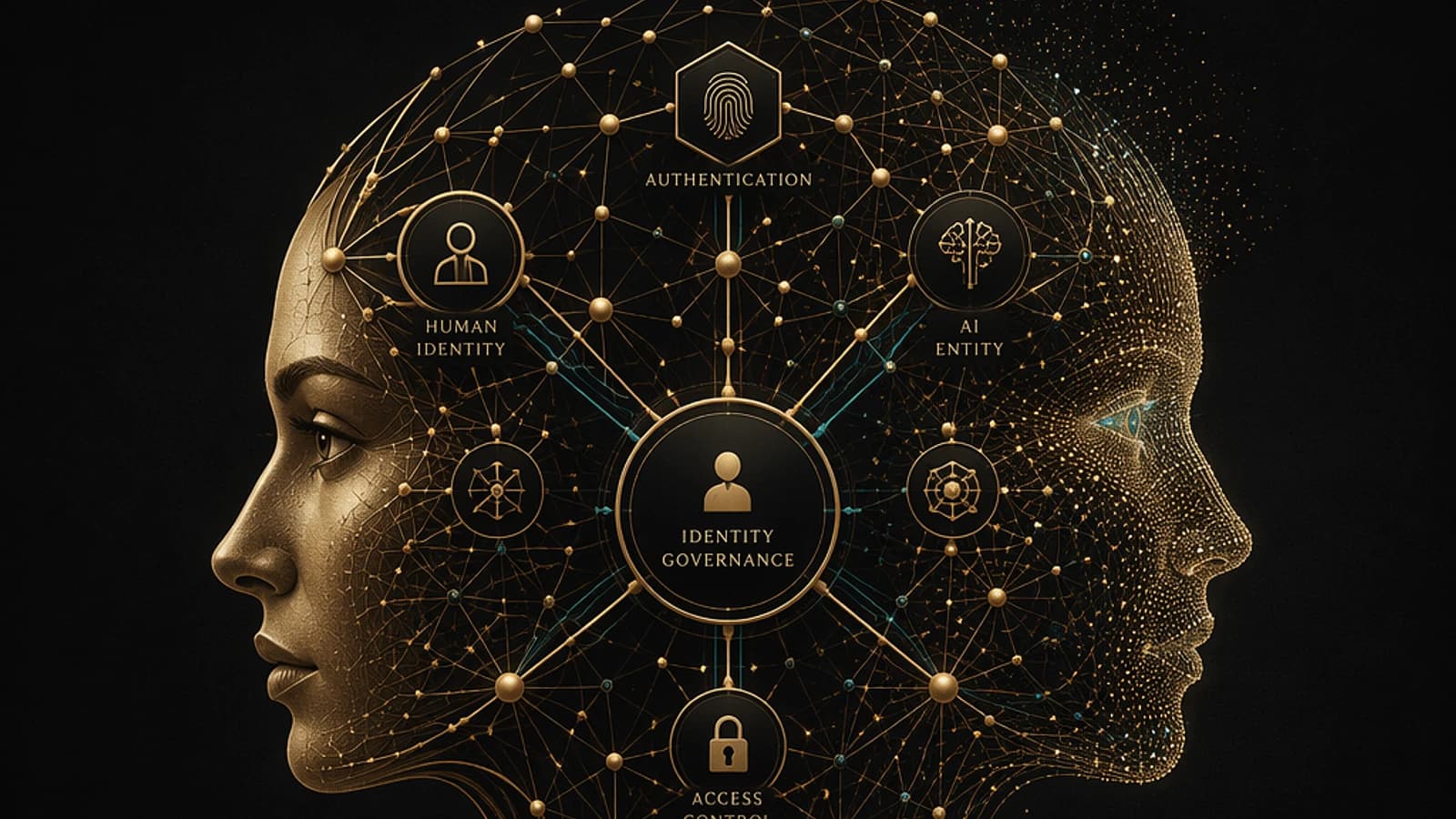
The emergence of AI agents, bots, and orchestrators is redefining how IT professionals approach identity management. Non-human identities are no longer considered secondary entities in the security landscape. They have become a first-order governance subject, requiring attention similar to traditional human identities.
Traditionally, identities were classified into three main categories: human (users), workload (applications and services), and technical services such as managed identities or service principals. Now, the identities of autonomous AI agents enrich this classification, bringing new challenges. Since these agents have advanced capabilities, notably access to complex tools and sensitive data, they must be governed by rigorous access control and conditional access mechanisms.
Understanding the context of AI agent identities
The four major identity families
The identity landscape now includes four major categories:
- Human identities: standard users using enterprise services.
- Workload identities: managed applications and services.
- Non-human identities: bots, AI agents, and advanced automations.
- Service identities: service principals and managed identities.
The attributes of an AI agent
An AI agent has a unique context to evaluate before any access decision. This context is based on key attributes:
- Unique identifier (Agent ID)
- Owner or creator
- Declared objective (purpose)
- Technical capabilities
- Execution environment (runtime)
- Specific access needs
- Mobilized tools
- Risk score
Good to know
The granularity of these attributes enables personalized policies for each agent, ensuring fine-grained governance tailored to the agent's mission.
The conditional access gateway: a key point
The conditional access policy gateway plays a central role as the access control system for AI agents. Organized in logical steps, it ensures management compliant with the principle of least privilege:
Identity verification
Identify and authenticate the AI agent to ensure its legitimacy.
Context evaluation
Analyze the agent's unique attributes to determine its needs and execution environment.
Policy application
Limit rights to what is strictly necessary to achieve the defined objective.
Traceability and monitoring
Log each action and continuously monitor to identify anomalies and maintain compliance.
Protected resources include:
- Cloud workloads: virtual machines, containers, serverless services.
- APIs and internal/external services.
- Data sources: databases, data lakes, storage.
- Tools and platforms: SaaS, DevOps, automation.
- Analytics and artificial intelligence services.
Tip
To simplify implementation, use the conditional access services integrated into Microsoft Azure AD which offer ready-to-use configurable controls.
Three pillars for effective governance
1. Identity inventory
Creating a comprehensive inventory of identities is fundamental. Identify each agent, orchestrator, and tool to ensure comprehensive protection.
2. Runtime attestation
Adopt approved execution controls, enabling dynamic validation of AI agents based on their environment and mission.
3. Policy drift control
Automate monitoring of agent capabilities to prevent uncontrolled accumulation of privileges. This proactive approach limits risks related to uncontrolled changes in their permissions.
Conclusion
It is essential to start with a detailed inventory of AI identities. By ensuring complete knowledge of agents and their interactions with the environment, organizations can apply robust conditional access policies. In evolving Microsoft 365 and Azure ecosystems, this approach provides a solid foundation for adapted and sustainable AI governance.
To deepen these concepts, explore the official Microsoft Azure AD documentation: Azure AD Documentation