Why 18 pillars and not a single perimeter
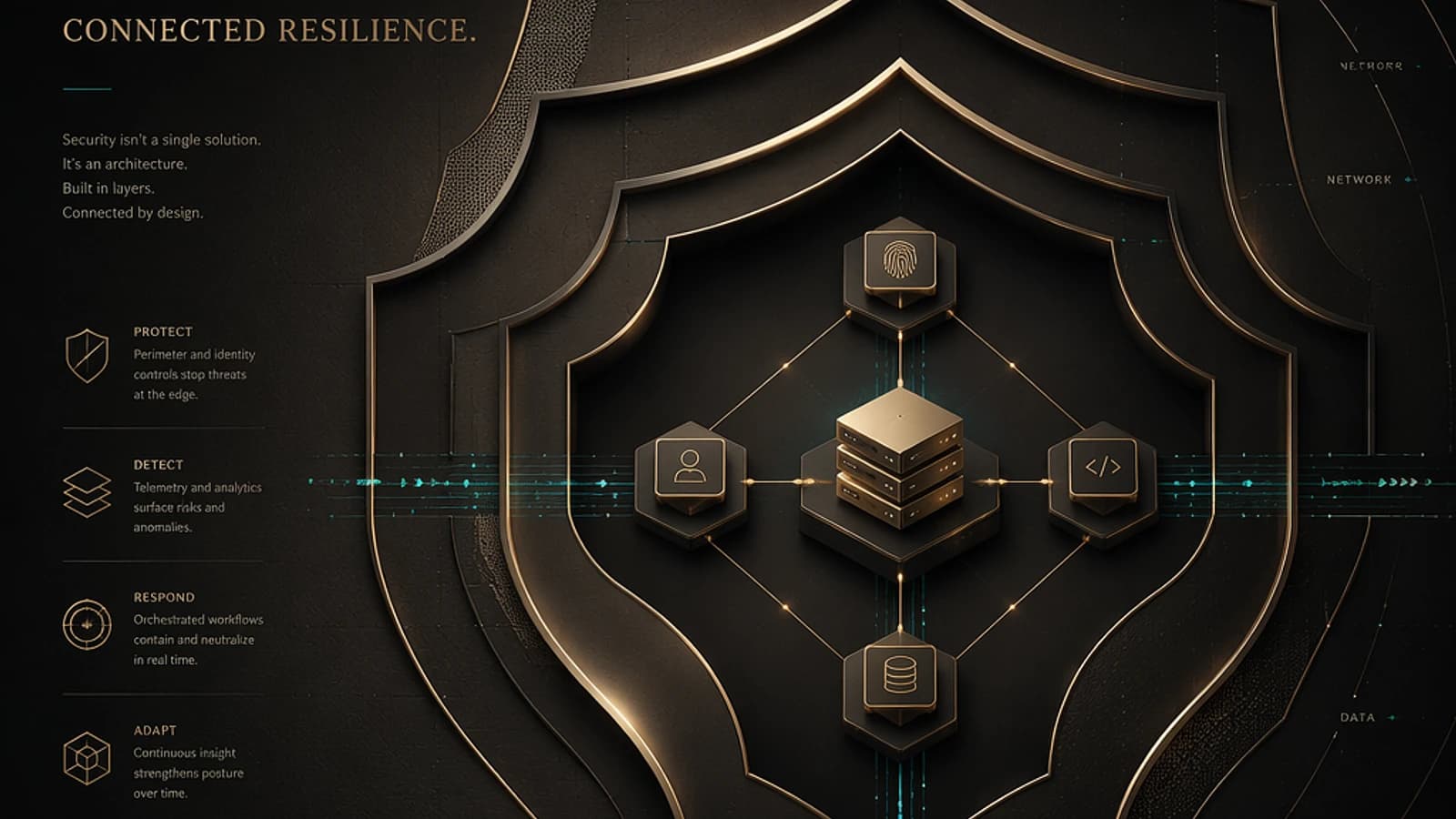
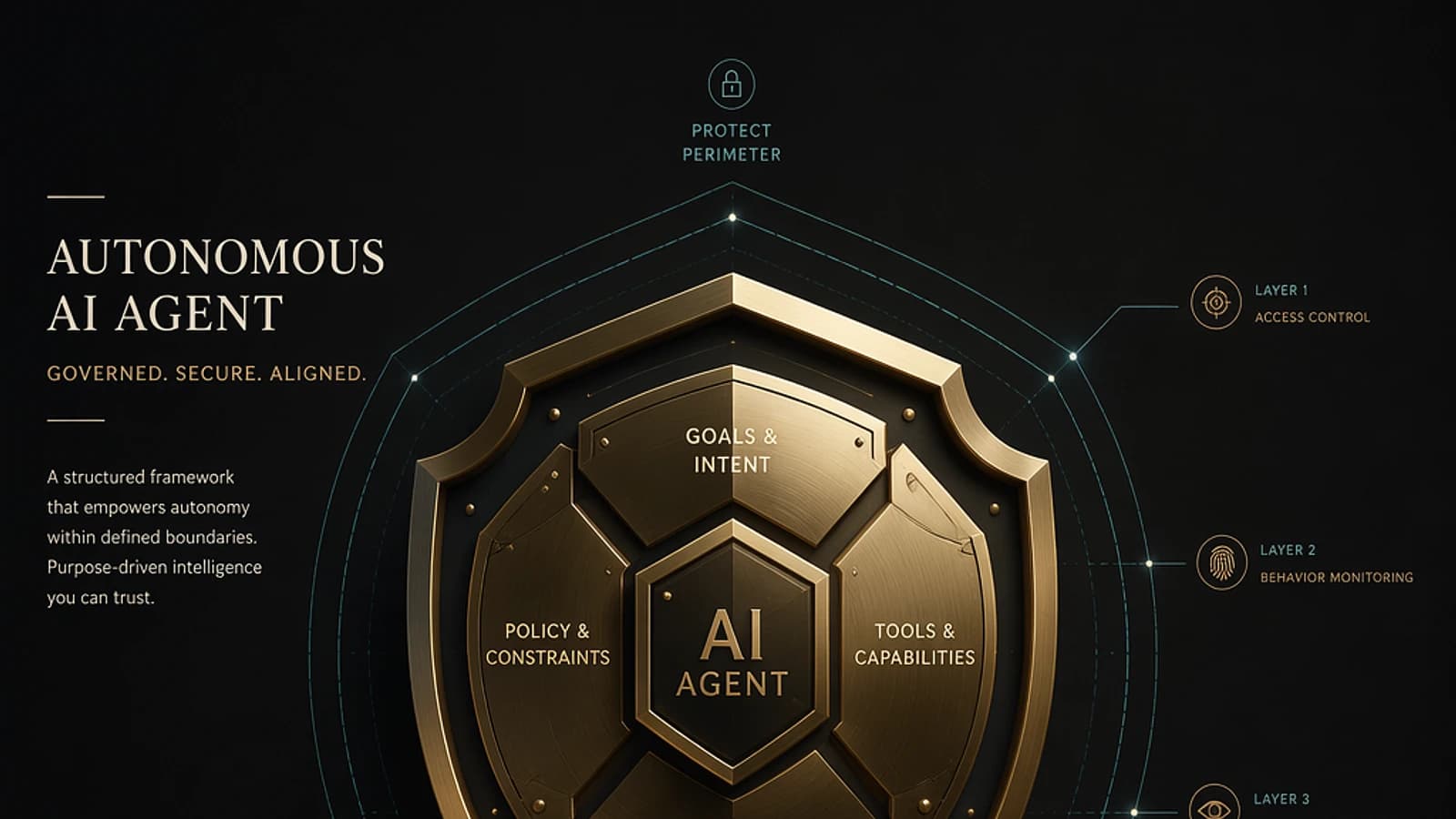
The attack surface of a modern cloud environment extends from identities to third-party software dependencies. A perimeter firewall or an isolated encryption policy is no longer sufficient. The framework presented here organizes cloud security into 18 interdependent components, each addressing a distinct layer of the system — from the identity layer to operational resilience.
For teams operating Microsoft 365 and Azure, this structure provides a concrete roadmap for auditing current posture and prioritizing investments.
Identity: the perimeter of modern security
The first three pillars place identity and trust at the center of everything.
Pillar 1 — Identity and Access Management (IAM)
The model is based on four fundamental mechanisms:
- Principle of least privilege: each account has only the rights strictly necessary for its function.
- MFA (multi-factor authentication) and SSO (single sign-on): reduce exposure surface without degrading user experience.
- RBAC (role-based access control): fine-grained permissions.
- Identity federation: secure extension to external partners or SaaS solutions.
In the Microsoft ecosystem, these mechanisms translate to Microsoft Entra ID, Conditional Access Policies, and Privileged Identity Management (PIM).
Pillar 2 — Zero Trust
Zero Trust is not a product but an architecture: explicitly verify each request, apply least privilege to each session, segment resources via micro-segmentation, and maintain continuous monitoring. No internal connection is implicitly trusted.
Pillar 3 — Cloud Security Posture Management (CSPM)
CSPM automates detection of misconfigurations, compliance assessment, and risk scoring. Microsoft Defender for Cloud fulfills this role in Azure, with prioritized recommendations and an actionable security score.
Quick starting point
Enable the free plan of Microsoft Defender for Cloud on your Azure subscriptions: it provides a security score and CSPM recommendations at no extra cost, before even activating paid plans.
Infrastructure, workloads, and data
Pillar 4 — Infrastructure Security
This layer covers classic network elements, but adapted for cloud:
- Network security groups (NSG) and next-generation firewalls.
- WAF (Web Application Firewall) for exposed applications.
- DDoS protection (Azure DDoS Protection for Azure deployments).
Pillar 5 — Workload and Container Security
AKS (Azure Kubernetes Service) deployments introduce specific vectors: compromised images, privilege escalation in pods, lack of network isolation between namespaces. Practices to implement include systematic image analysis, runtime protection, and hardening of Kubernetes configurations.
Pillar 6 — Data Protection
Four dimensions must be covered:
- Encryption at rest and in transit.
- Key management (Azure Key Vault, managed HSM).
- Data classification.
- DLP (data loss prevention) via Microsoft Purview.
Pillars 7 and 8 — API and Application Security
API security requires a discovery phase (inventory exposed endpoints), strict access control, and rate limiting to contain abuse. On the application side, secure SDLC (software development lifecycle) integrates static (SAST) and dynamic (DAST) code analysis, as well as open source dependency analysis.
Pillar 9 — Advanced Network Security
Beyond NSGs: VPC segmentation (Virtual Private Cloud), private endpoints to isolate PaaS services from the public network, and site-to-site VPNs for hybrid connections.
| Layer | Key Component | Associated Microsoft Tool |
|---|---|---|
| Identity | IAM, Zero Trust, CSPM | Entra ID, Defender for Cloud |
| Infrastructure | NSG, WAF, DDoS | Azure Firewall, DDoS Protection |
| Containers | Image analysis, runtime | Defender for Containers |
| Data | Encryption, DLP | Key Vault, Microsoft Purview |
| Applications | SAST, DAST, dependencies | GitHub Advanced Security |
| Advanced Network | Private Endpoints, VPN | Azure Virtual Network |
Detection, monitoring, and security operations
Pillar 10 — Threat Detection and Response
Real-time analytics, combined with AI and machine learning, enable detection of abnormal behaviors that static rules miss. Automated response reduces the delay between detection and containment. These capabilities are embodied in Microsoft Sentinel (cloud-native SIEM) and Microsoft Defender XDR (extended detection and response).
Pillar 11 — 24/7 SOC
A continuously operational SOC (Security Operations Center) remains essential for handling high-criticality alerts and coordinating incident response. Organizations without resources for an internal SOC can rely on an MSSP (Managed Security Service Provider) service integrated with Sentinel and Defender tools.
Pillar 12 — Logging and Monitoring
Centralizing logs in a single data plane (Log Analytics Workspace for Azure environments) enables event correlation, anomaly detection, and building solid audit trails for compliance audits.
Log Retention
Default retention in a Log Analytics Workspace is 30 days. Some frameworks like PCI-DSS or GDPR require much longer retention. Explicitly configure retention and archiving in workspace settings.
Governance, resilience, and automation
Pillars 13 and 14 — Compliance, Governance, and Risk Management
Regulatory compliance (GDPR, HIPAA, PCI-DSS) is not a one-time exercise: it requires a maintained asset inventory, a data processing mapping, and continuous risk assessment. Microsoft Purview Compliance Manager offers compliance dashboards aligned with these frameworks.
Pillar 15 — Disaster Recovery and Business Continuity
Two metrics structure this pillar:
- RTO (Recovery Time Objective): maximum acceptable outage duration.
- RPO (Recovery Point Objective): maximum tolerable data loss.
Multi-region Azure architectures, combined with Azure Backup and Azure Site Recovery, enable meeting strict RTO/RPO objectives. These targets must be documented and tested regularly, not just theorized.
Pillar 16 — Automation and Orchestration (SOAR)
SOAR (Security Orchestration, Automation and Response) reduces the manual burden on SOC teams by automating repetitive workflows: alert enrichment, compromised account blocking, machine isolation. In Sentinel, these workflows are built via Playbooks based on Azure Logic Apps.
Here is an example of a PowerShell trigger to call a Sentinel Playbook via the Graph API:
1# Triggers an automated action on a Sentinel incident via REST API2$incidentId = "<your-incident-id>"3$workspaceName = "<workspace-name>"4$resourceGroup = "<rg-name>"5$subscriptionId = "<subscription-id>"6 7$uri = "https://management.azure.com/subscriptions/$subscriptionId/resourceGroups/$resourceGroup/providers/Microsoft.OperationalInsights/workspaces/$workspaceName/providers/Microsoft.SecurityInsights/incidents/$incidentId/runPlaybook?api-version=2023-02-01"8 9Invoke-AzRestMethod -Uri $uri -Method POSTThis script calls the Microsoft Sentinel API runPlaybook endpoint to trigger a Playbook on an incident identified by its incidentId.
Culture, training, and supply chain
Pillar 17 — Security Awareness
Even the strongest technical controls can be bypassed by human error. Continuous training, phishing simulations, and practical exercises (tabletop exercises) maintain team vigilance. Microsoft Defender for Office 365 includes Attack Simulator for these training scenarios.
Pillar 18 — Supply Chain and Third-Party Security
Attacks targeting the software supply chain have demonstrated that a compromised third-party vendor can become a major intrusion vector. This pillar requires:
- Systematic security assessment of critical suppliers.
- Complete visibility into open source software dependencies (SBOM — Software Bill of Materials).
- Contractual clauses imposing minimum security standards on partners.
Underestimated Third-Party Risk
Access granted to partners and contractors via Entra ID guest accounts must be subject to regular review. The accumulation of active external accounts without governance is a frequently overlooked attack vector.
Key takeaways
These 18 pillars are not independent: a weakness in one can neutralize the benefits of others. Some priorities to structure a roadmap:
- Start with identity: universal MFA, PIM for privileged roles, guest access review.
- Enable CSPM: the Defender for Cloud score quickly reveals high-risk configurations.
- Centralize logs before investing in detection: without data, no reliable analytics.
- Document and test RTO/RPO procedures — untested DR doesn't exist operationally.
- Integrate security into the SDLC: fixing a vulnerability in production costs ten times more than in development.
To deepen your understanding, the documentation Microsoft Security Best Practices and Cloud Adoption Framework — Security are solid references for operationalizing these pillars in an Azure context.